


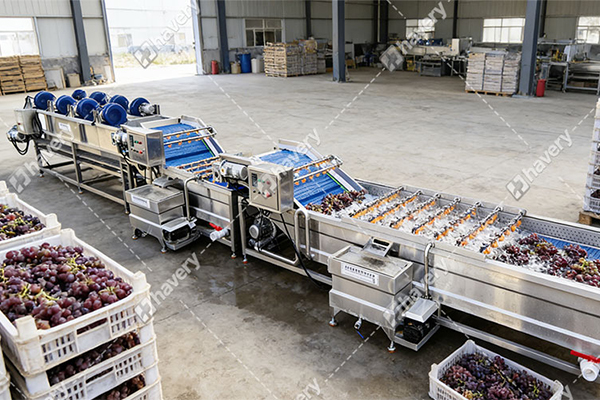

Grapes are delicate fruits with thin skins and soft pulp, which makes them highly sensitive during industrial processing. If grapes are washed improperly, they can easily be damaged, squeezed, or lose their natural bloom. Therefore, understanding how to wash grape fruits gently in factory environments is extremely important for maintaining product quality and market value.
Modern fruit processing plants use specialized equipment to clean grapes efficiently while protecting their structure. Among these solutions, the grape washing machine using bubble cleaning technology has become one of the most effective and widely used systems. A properly designed grape washing machine can remove dirt, pesticide residues, and impurities without damaging the grapes, ensuring food safety and product quality.
This article explains how grapes are gently washed in factories, the technology behind the process, and why a bubble-type grape washing machine is the preferred solution for grape processors.
Challenges in Washing Grapes
Before discussing the washing process, it is important to understand the challenges involved in cleaning grapes. Unlike harder fruits, grapes grow in clusters and have fragile skins. Excessive mechanical force can easily crush them.
Traditional washing methods such as high-pressure water spraying may cause grapes to break or separate from their stems. In addition, grapes often carry dust, pesticide residues, and small particles trapped between fruits in a cluster.
To solve these problems, modern factories use a grape washing machine designed specifically for delicate fruits. The goal of the grape washing machine is to provide thorough cleaning while minimizing physical impact on the grapes.
Bubble Cleaning Technology in Grape Washing
The most common equipment used for washing grapes in factories is the bubble-type grape washing machine. This machine uses water circulation and air bubbles to gently clean the fruit.
Inside the grape washing machine, grapes are placed in a water tank where a powerful air pump generates thousands of small bubbles. These bubbles continuously rise through the water, creating gentle agitation that separates dirt and impurities from the grape surface.
Because the cleaning force comes from water movement rather than mechanical friction, the grape washing machine can clean grapes thoroughly while preventing damage. This makes the bubble cleaning grape washing machine ideal for processing delicate fruits.
Step 1: Feeding Grapes Into the Grape Washing Machine
The washing process begins by loading fresh grapes into the grape washing machine. Grapes are usually transported by conveyor or manually placed into the water tank.
The design of the grape washing machine ensures that grapes enter the tank evenly, preventing excessive stacking that could cause fruit compression. Once inside the tank, grapes float and move freely in the water environment.
This stage allows the grape washing machine to begin loosening surface dust and debris before the main cleaning process.
Step 2: Bubble Cleaning Process
After entering the tank, the bubble system inside the grape washing machine begins operating. Air pumps release continuous streams of bubbles from the bottom of the tank.
These bubbles create gentle turbulence in the water, causing grapes to move slightly and rotate naturally. This motion allows water to reach all surfaces of the fruit, removing dirt, pesticide residues, and other impurities.
Because the cleaning force is evenly distributed throughout the tank, the grape washing machine provides uniform cleaning for every grape without causing damage.
Step 3: Circulating Water Filtration
A modern grape washing machine also includes a circulating filtration system. As grapes are cleaned, dirt and particles are separated from the fruit and carried away by the water flow.
The filtration system inside the grape washing machine collects these impurities and prevents them from returning to the washing tank. This ensures that the washing water remains clean throughout the process.
Continuous filtration not only improves hygiene but also helps the grape washing machine maintain stable washing performance.
Step 4: Gentle Conveying and Discharge
After the cleaning process is completed, grapes are transported out of the grape washing machine through a conveyor system. The conveyor is usually designed with food-grade materials and smooth surfaces to avoid damaging the fruit.
The gradual lifting movement ensures that grapes leave the grape washing machine smoothly while excess water drains back into the tank. This gentle conveying process helps preserve the natural appearance and structure of the grapes.
Grape Washing Machine Advantages
Using a bubble-type grape washing machine provides several advantages compared with manual washing or high-pressure cleaning methods.
Gentle Cleaning for Delicate Fruits
The bubble agitation system allows the grape washing machine to clean grapes without mechanical damage, making it ideal for fragile fruits.
High Cleaning Efficiency
A commercial grape washing machine can process large quantities of grapes in a short time, significantly improving productivity in fruit processing plants.
Food Safety and Hygiene
The circulating water filtration system ensures that the grape washing machine maintains a clean washing environment throughout the process.
Suitable for Processing Lines
The grape washing machine can be easily integrated into fruit processing lines that include sorting, drying, and packaging equipment.
Importance of Surface Drying After Washing
After grapes are cleaned, excess water remains on the fruit surface. If this moisture is not removed quickly, it may affect later processing steps such as grading, packaging, or drying.
For this reason, many factories install a grape washing machine together with an air knife drying system. The air knife dryer uses high-speed airflow to blow away water droplets from the grape surface.
This drying step helps ensure that grapes leaving the grape washing machine are clean and nearly dry, which is ideal for subsequent packaging or grading processes.
Complete Grape Washing and Drying Solution
In modern fruit processing lines, a grape washing machine is often combined with other equipment to create a complete processing solution. After washing, grapes can pass through a wind knife air drying machine that quickly removes surface moisture.
This combination of grape washing machine and air knife drying technology improves overall processing efficiency while maintaining the natural quality of grapes. Clean and dry grapes are easier to sort, pack, and transport without quality loss.
Conclusion
Understanding how to wash grape fruits gently in factory environments is essential for maintaining fruit quality and ensuring food safety. The bubble-type grape washing machine provides an ideal solution for cleaning delicate grapes without causing damage.
By using water circulation, bubble agitation, and filtration systems, the grape washing machine can effectively remove dirt and impurities while preserving the natural appearance of the fruit.
For even better results, grape processors often combine the grape washing machine with a wind knife air drying machine to remove surface water quickly after washing. This integrated solution allows grapes to move smoothly to the next processing stages such as sorting, grading, or packaging.
If you are looking for a reliable grape processing solution, we can provide professional grape washing machine systems along with matching air knife drying equipment. Feel free to leave us a message online to learn more about our machines and customized fruit processing solutions.