


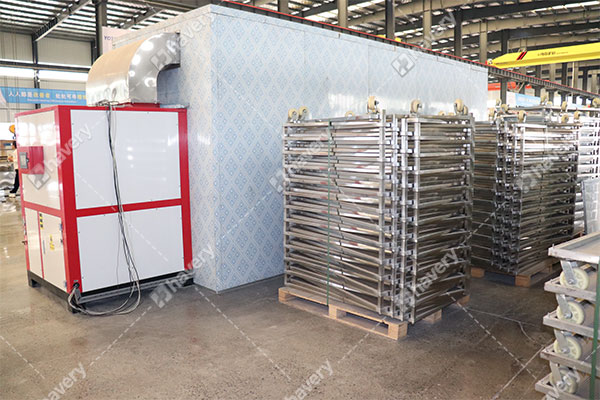

Le Processus de déshydratation du raisin is an essential method used to convert fresh grapes into long-lasting dried fruits such as raisins. Fresh grapes contain a high moisture content, usually around 75–80%, which makes them highly perishable during storage and transportation. By removing most of the water from the fruit, the dehydration process helps preserve the natural sweetness, flavor, and nutrients of grapes while significantly extending their shelf life.
In modern fruit processing industries, le machine de déshydratation de raisin has become the core equipment for this process. Unlike traditional sun drying methods that depend on weather conditions and require long drying times, un machine de déshydratation de raisin equipped with heat pump drying technology provides a controlled environment for efficient and hygienic dehydration. This advanced drying method ensures stable temperature, uniform airflow, and energy-efficient operation, making it ideal for large-scale raisin production.
1. Raw Material Selection in the Grape Dehydration Process
La première étape dans le Processus de déshydratation du raisin is selecting high-quality grapes suitable for drying. Grapes used for dehydration should be fully mature, doux, and free from damage, mold, or pest infestation. Varieties with higher sugar content and thinner skins are often preferred because they produce raisins with better taste and texture.
In commercial processing plants, grapes are carefully sorted before entering the production line. Proper selection ensures that the machine de déshydratation de raisin can process the fruit evenly and produce consistent dehydration results.
2. Lavage et nettoyage
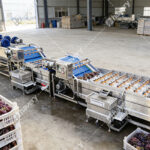
Before dehydration begins, grapes must be thoroughly washed to remove dirt, résidus de pesticides, et autres impuretés. Industrial fruit washing equipment is usually used to clean grapes gently without damaging their delicate skins.
Après le lavage, grapes may pass through an air drying or de-watering stage to remove surface water. This preparation step is important because excess moisture on the surface can reduce the efficiency of the machine de déshydratation de raisin during the drying process.
3. Pretreatment Before Dehydration
Pretreatment is often applied before grapes enter the machine de déshydratation de raisin. Grapes naturally have a waxy layer on their skin that slows down moisture evaporation. To improve dehydration efficiency, grapes may be dipped in a mild alkaline solution or other food-grade treatment.
This pretreatment step helps break down the wax layer and allows moisture to escape more easily. As a result, le machine de déshydratation de raisin can complete the drying process faster while producing raisins with better color and texture.
4. Dehydration Using a Heat Pump Grape Dehydrating Machine
The most critical stage of the Processus de déshydratation du raisin is the drying phase. Traditionally, grapes were spread under the sun for natural dehydration, but this method requires several days or weeks and is heavily influenced by weather conditions.
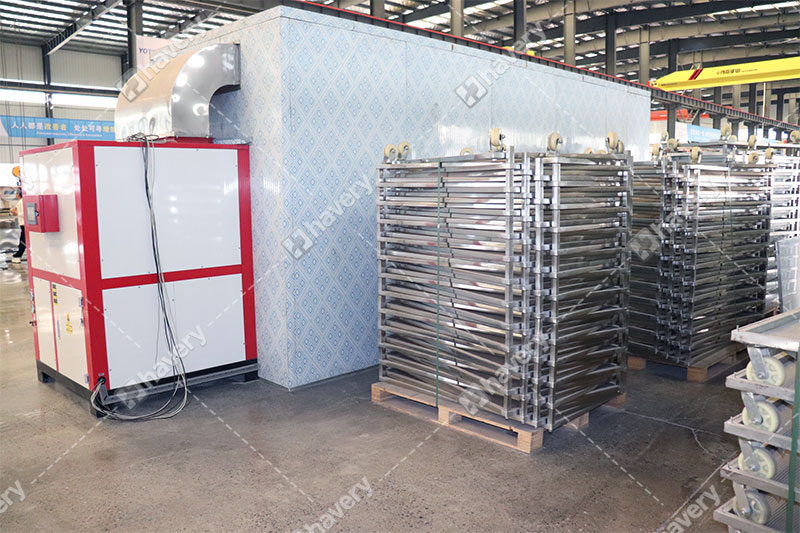
Modern processing plants now rely on a machine de déshydratation de raisin equipped with heat pump drying technology. This type of machine de déshydratation de raisin uses a closed-loop heat pump system to generate stable warm air while recovering and reusing heat energy. Compared with conventional drying equipment, a heat pump machine de déshydratation de raisin offers higher energy efficiency and more precise temperature control.
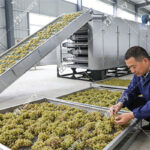
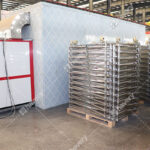
During operation, grapes are evenly placed on drying trays or mesh racks inside the chamber. Le machine de déshydratation de raisin circulates warm air continuously through the drying room, éliminer progressivement l'humidité des raisins. Because the heat pump system controls temperature and humidity carefully, le machine de déshydratation de raisin can dry grapes gently without damaging their natural color, flavor, or nutrients.
5. Moisture Control and Process Adjustment
An important aspect of the Processus de déshydratation du raisin is controlling the final moisture level of the grapes. For most raisin products, the target moisture content is around 15–18%.
Un moderne machine de déshydratation de raisin permet aux opérateurs d'ajuster la température, flux d'air, and drying time according to different grape varieties and production requirements. The intelligent control system of the machine de déshydratation de raisin ensures that grapes are dried evenly without over-drying or uneven dehydration.
6. Refroidissement et conditionnement
After the drying process is completed, the raisins must be cooled before packaging. Cooling helps stabilize the internal moisture distribution and prevents condensation on the product surface.
In many processing lines, grapes are transferred from the machine de déshydratation de raisin to a cooling area where the product gradually returns to ambient temperature. This step ensures that the raisins maintain good texture and appearance.
7. Tri et emballage
The final stage of the Processus de déshydratation du raisin is sorting and packaging. Dried grapes are inspected to remove defective pieces and may be graded based on size, couleur, ou qualité.
Once sorting is completed, the raisins are packed in moisture-proof packaging to maintain freshness during storage and transportation. A ce stade, les raisins ont complété avec succès le Processus de déshydratation du raisin and are ready for market distribution.
Heat Pump Grape Dehydrating Machines Advantages
Compared with traditional drying methods, using a machine de déshydratation de raisin with heat pump technology offers several key advantages:
Energy Efficiency
A heat pump machine de déshydratation de raisin recycles heat energy within the system, significantly reducing energy consumption.
Stable Drying Environment
Le machine de déshydratation de raisin provides precise control of temperature and humidity, ensuring consistent drying quality.
Better Product Quality
Gentle drying conditions help maintain the natural color, douceur, et la valeur nutritionnelle des raisins.
Weather-Independent Production
Unlike sun drying, le machine de déshydratation de raisin allows producers to operate continuously regardless of climate conditions.
Conclusion
Le Processus de déshydratation du raisin includes several important stages such as grape selection, lavage, prétraitement, dehydration, refroidissement, et emballage. Among these steps, the drying stage is the most critical in determining the quality of the final raisins.
By using a modern machine de déshydratation de raisin equipped with heat pump technology, fruit processors can achieve efficient, hygiénique, and energy-saving dehydration. This advanced equipment ensures stable drying conditions while preserving the natural flavor and nutritional value of grapes.
If you are planning to build or upgrade a raisin processing line, choosing a professional machine de déshydratation de raisin is a key step for improving productivity and product quality. N'hésitez pas à laissez-nous un message en ligne to get more detailed information about our heat pump grape drying solutions, equipment specifications, and customized processing systems.