


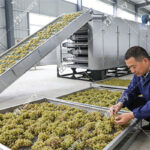
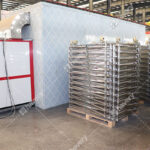
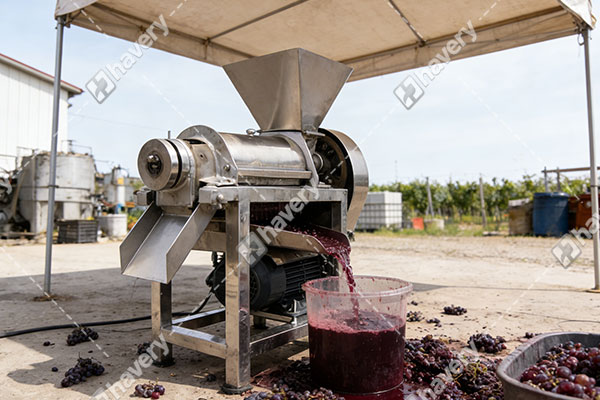

Le jus de raisin est l'une des boissons aux fruits les plus populaires sur le marché mondial en raison de sa riche saveur., douceur naturelle, et haute valeur nutritionnelle. En production industrielle, le jus de raisin doit être traité efficacement tout en conservant sa fraîcheur et sa qualité nutritionnelle. C'est là qu'un professionnel machine à jus de raisin joue un rôle critique. Un moderne machine à jus de raisin aide les usines à traiter rapidement de gros volumes de raisins tout en garantissant l’hygiène, cohérence, et un rendement en jus élevé.
Dans cet article, nous expliquerons comment le jus de raisin est produit dans une usine et comment différents types d'équipements, surtout le machine à jus de raisin, contribuer à une chaîne de production de jus de raisin efficace.
1. Sélection et nettoyage des matières premières
La production de jus de raisin de haute qualité commence toujours par la sélection de raisins frais et mûrs. Les raisins utilisés pour la transformation du jus doivent avoir une bonne teneur en sucre, acidité équilibrée, et aucun signe de pourriture.
Après la récolte, les raisins sont transportés vers l'installation de transformation où ils doivent être soigneusement nettoyés. Poussière, feuilles, tiges, et les résidus de pesticides doivent être éliminés pour garantir la sécurité alimentaire.
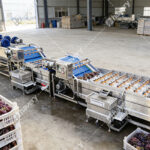
Les usines utilisent généralement un équipement de lavage des fruits avant d'introduire les raisins dans le machine à jus de raisin. Des raisins propres garantissent la machine à jus de raisin peut fonctionner efficacement et empêcher la contamination pendant le traitement.
2. Égrappage et foulage
Avant d'extraire le jus, les raisins doivent d'abord être séparés de leurs tiges. Les tiges contiennent des tanins qui peuvent affecter négativement le goût du jus si elles sont traitées ensemble..
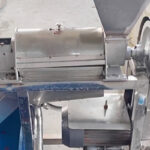
Une unité d'égrappage et de broyage est généralement connectée avant le machine à jus de raisin. Cet équipement écrase délicatement les raisins et libère la pulpe tout en conservant la saveur naturelle du fruit. Une fois écrasé, le moût de raisin devient plus facile pour le machine à jus de raisin extraire le jus efficacement.
Cette étape augmente également le rendement en jus et assure la machine à jus de raisin peut travailler en continu dans une production à grande échelle.
3. Processus d'extraction du jus
L’étape la plus importante dans la production industrielle de jus de raisin est l’extraction du jus.. A ce stade, les raisins foulés sont introduits directement dans le machine à jus de raisin.
Un rendement élevé machine à jus de raisin utilise une technologie de pressage mécanique ou d'extrusion à vis pour séparer le jus des peaux et des graines. La machine applique une pression contrôlée afin qu'un maximum de jus soit extrait sans endommager la saveur naturelle.
Moderne machine à jus de raisin les conceptions incluent souvent une construction en acier inoxydable, systèmes d'alimentation automatiques, et commandes de pression réglables. Ces fonctionnalités aident les usines à améliorer le rendement en jus tout en maintenant les normes de traitement hygiéniques..
Avec l'aide d'un expert machine à jus de raisin, les usines peuvent traiter des centaines, voire des milliers de kilogrammes de raisins par heure.
4. Filtration et clarification
Après extraction, le jus de raisin cru peut contenir des particules de pulpe, graines, ou des solides fins. Donc, une filtration et une clarification sont nécessaires.
Les systèmes de filtration industriels sont généralement installés après machine à jus de raisin pour éliminer les matières en suspension et améliorer la clarté du jus. Certaines usines utilisent également un traitement enzymatique ou des décanteurs pour affiner davantage le jus..
Cette étape garantit que le produit final est visuellement attrayant et a une texture lisse avant la pasteurisation et l'emballage..
5. Pasteurisation et stérilisation
Le jus de raisin frais est très nutritif mais peut également être sujet à la croissance microbienne. Pour prolonger la durée de conservation et maintenir la sécurité alimentaire, la pasteurisation est nécessaire.
Le jus filtré est chauffé à une température contrôlée pendant une courte période pour éliminer les micro-organismes nuisibles. Après pasteurisation, le jus est rapidement refroidi pour préserver la saveur et le contenu nutritionnel.
Bien que la pasteurisation ait lieu après l'extraction, l'efficacité du machine à jus de raisin influence toujours la qualité du jus entrant dans cette étape. Une haute qualité machine à jus de raisin aide à maintenir une composition de jus constante, ce qui améliore les résultats de pasteurisation.
6. Remplissage et emballage
Une fois pasteurisé, le jus de raisin est prêt à être rempli et emballé. Les machines de remplissage de liquides automatisées sont utilisées pour remplir les bouteilles, canettes, ou des cartons avec des volumes précis de jus.
L'emballage joue un rôle important dans le maintien de la fraîcheur et la prolongation de la durée de conservation. Les usines de boissons modernes intègrent souvent le remplissage, plafonnement, étiquetage, et des systèmes d'emballage dans une ligne de production entièrement automatisée connectée au machine à jus de raisin.
Avantages de la machine à jus de raisin industrielle
Faire appel à un professionnel machine à jus de raisin offre plusieurs avantages aux fabricants de jus de raisin:
- Efficacité élevée d’extraction du jus
- Grande capacité de traitement pour la production en usine
- Construction en acier inoxydable de qualité alimentaire
- Nettoyage et entretien faciles
- Fonctionnement stable et continu
En raison de ces avantages, investir dans un système fiable machine à jus de raisin est essentiel pour construire une usine de transformation de jus de raisin efficace.
Conclusion
La production industrielle de jus de raisin comporte plusieurs étapes clés, y compris le nettoyage des raisins, humeur, écrasement, extraction de jus, filtration, pasteurisation, et emballage. Parmi toutes ces étapes, le machine à jus de raisin est l'équipement de base qui détermine le rendement en jus, efficacité du traitement, et la qualité des produits.
Pour les usines qui envisagent de démarrer ou de moderniser la production de jus de raisin, choisir le bon machine à jus de raisin peut améliorer considérablement la productivité et garantir une qualité de jus constante. Avec une technologie de traitement moderne et un équipement automatisé, la fabrication à grande échelle de jus de raisin est devenue plus efficace, hygiénique, et rentable que jamais.